← Selected workCase study
Lazada Messaging
Redesigning buyer–seller chat for international markets
Lazada is Alibaba’s e-commerce platform in Southeast Asia, and chat is where buyers ask sellers about products before they buy. I led the redesign of the international IM experience. The goal was a messaging product that worked consistently across platforms and that other business units could customize quickly instead of building their own.
Finding the way into chat
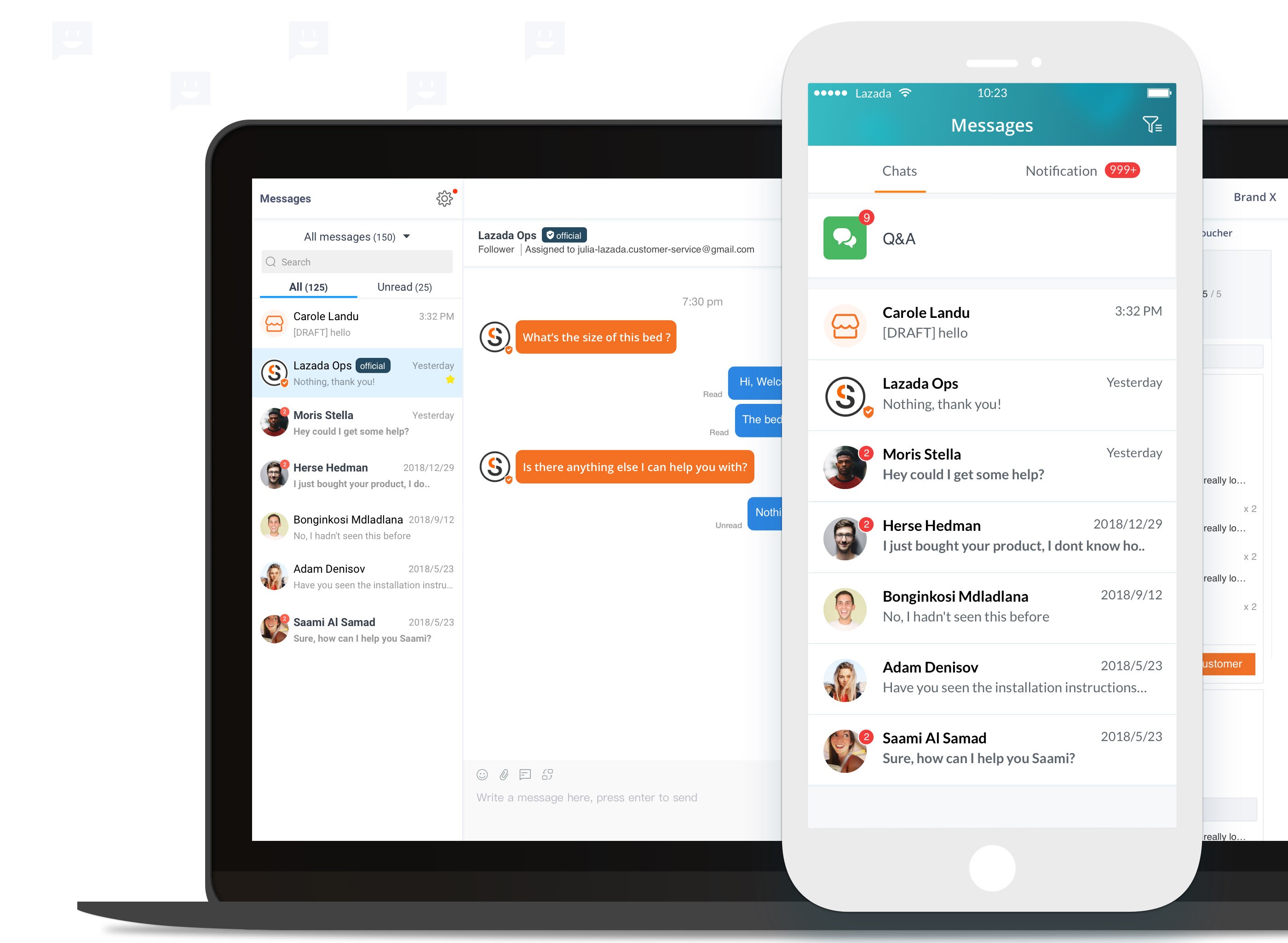
The first problem came before any conversation started. The chat entry used different icons on different pages and platforms, so buyers had trouble finding it at all. I unified the icon and the visual system around it.
I also aligned the core chat experience across iOS, Android and web. A buyer who started a conversation on their phone and continued on a laptop should not have to relearn where things were.
Starting the conversation with context
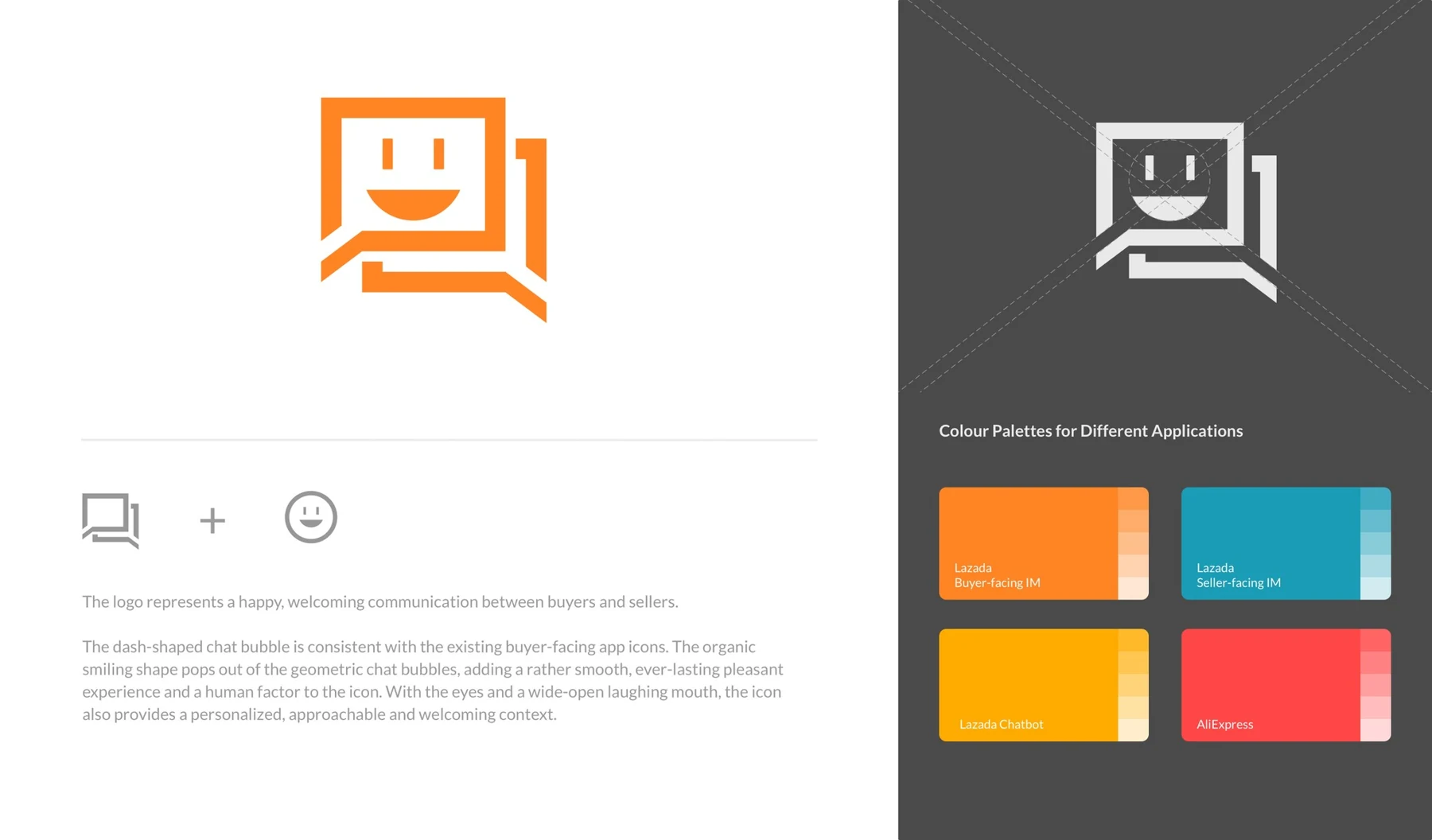
Buyers often enter chat with a question about a specific product. I designed a quick product link based on where the conversation started, so a buyer could send that context to the seller instead of describing the item from scratch.
This helps both sides. The buyer does not have to describe the item, and the seller sees exactly what the question is about before reading it.
Talking across languages
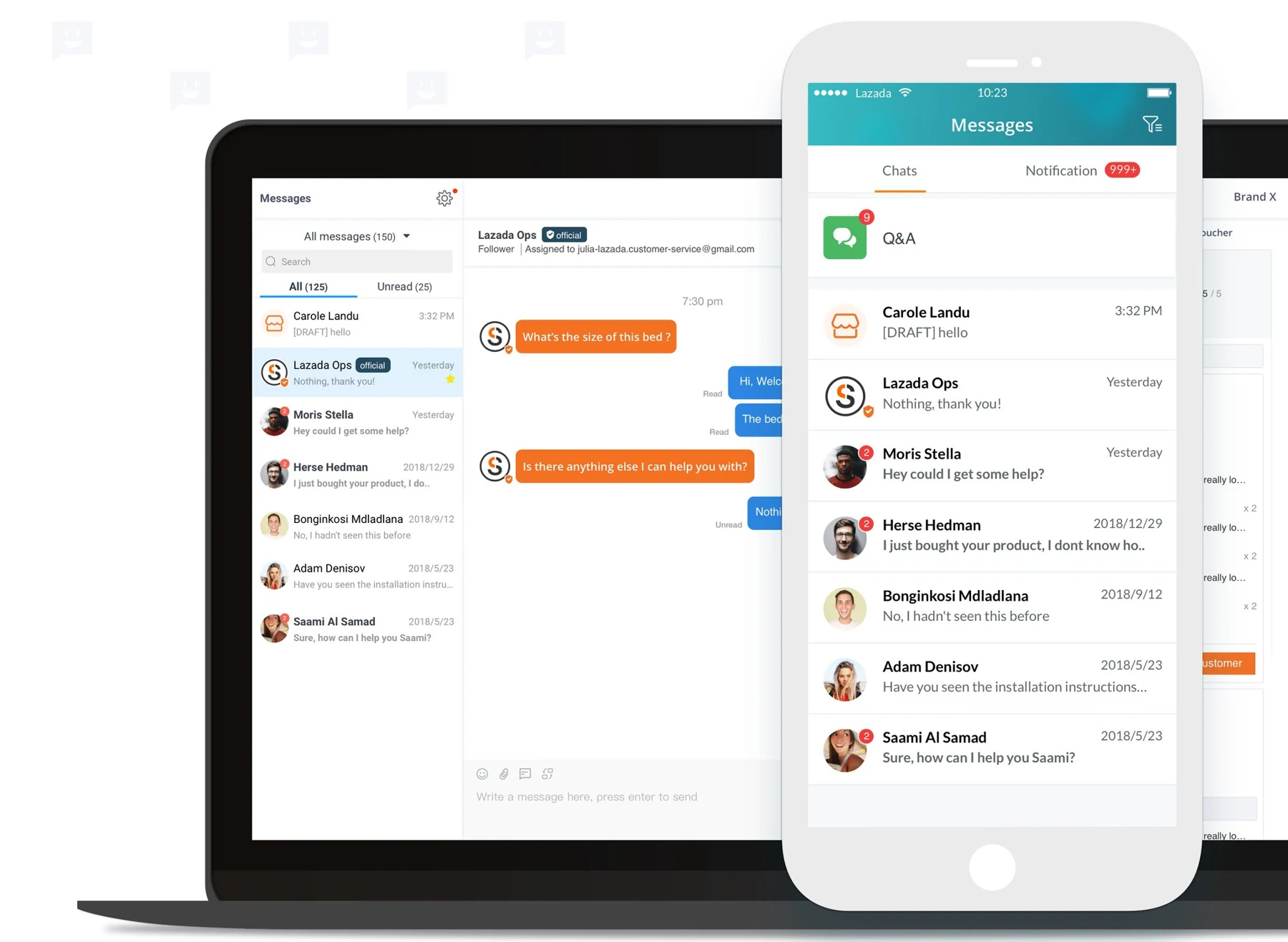
Many sellers on Lazada are based in China, while the buyers are in Southeast Asia. Without help, the two often do not share a language. I designed live translation into the chat on every platform, so both sides can write in their own language and read the other’s. Translation sits inside the conversation rather than in a separate tool, so neither side has to copy and paste to understand the other.
Building chat as parts, not pages
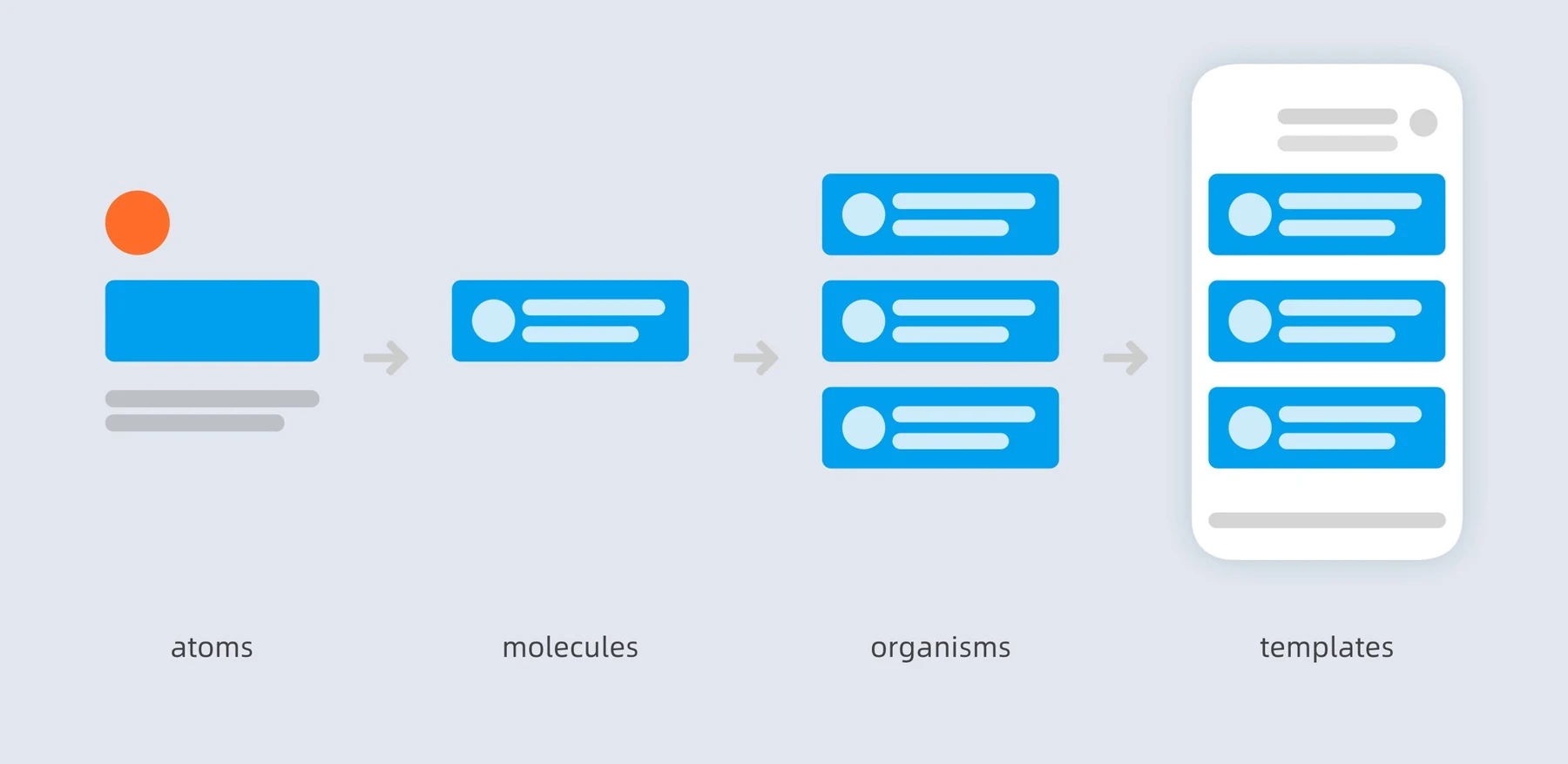
Several Alibaba international businesses, including Lazada and AliExpress, needed messaging, each with its own requirements. Instead of a finished chat screen each team would fork, I built an atomic IM UI library: small, consistent pieces that teams could combine and customize for their own product.
That library made customization quick without breaking consistency, which was the brief. It also meant the improvements above could reach other businesses without each one redesigning them.
- One icon and visual system for the chat entry across pages and platforms.
- A consistent core experience on iOS, Android and web.
- Context-aware product links based on where the buyer started.
- Live translation between sellers and buyers.
- An atomic component library for Lazada, AliExpress and other units.
What I took forward
Chat in commerce is a tool for answering a product question. Most of the redesign was about removing what stood between a buyer’s question and a seller’s answer: a hard-to-find entry, missing context and a language gap. The atomic library made those fixes repeatable across businesses.